Rubber Pad Forming Press
BITAERON’s Elastoforming Press is an advanced flexible rubber/urethane pad alternative to traditional Flexform™ systems. Delivering up to 14,500 PSI forming pressure, it features ±1.5 MPa closed-loop pressure control, active 4-corner leveling (≤0.1 mm/m), ±0.05–0.1 mm stroke repeatability, and a 3–10s programmable dwell cycle for zero-springback accuracy.
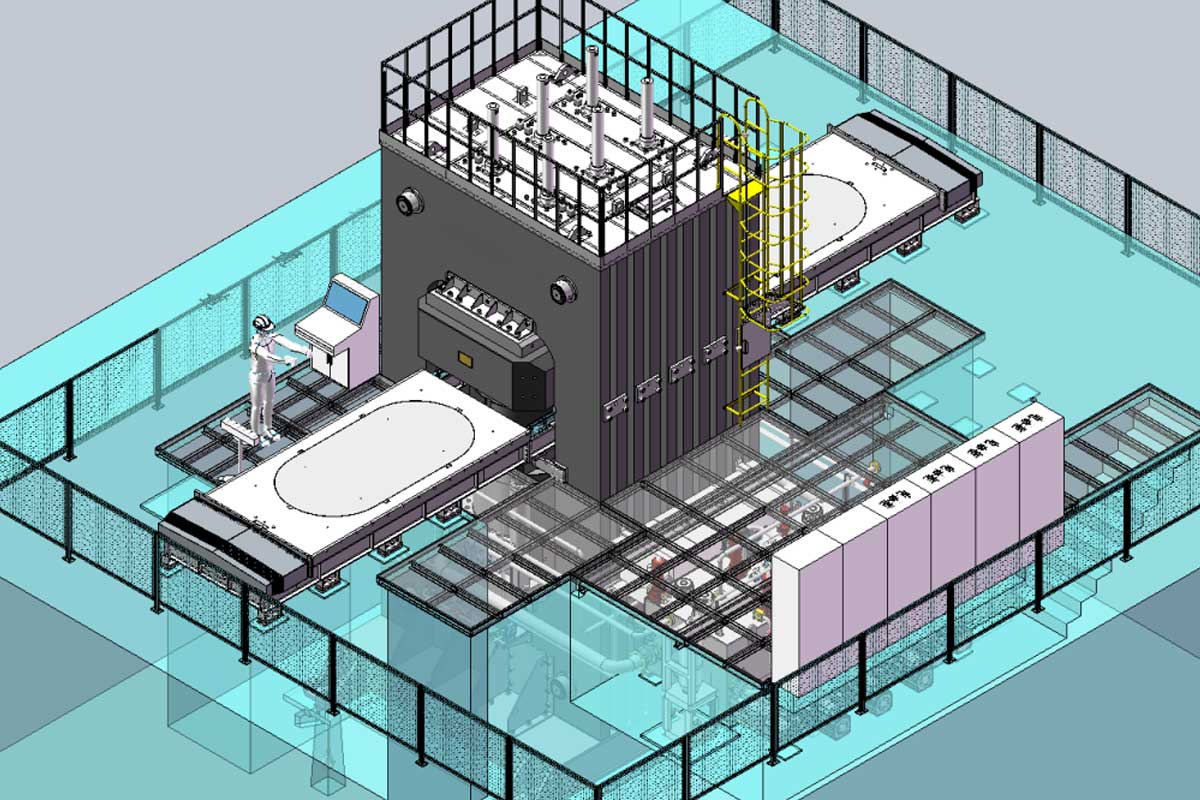
BITAERON Rubber Pad Molding Machine
What is a Rubber Pad Forming Press?
BITAERON provides Rubber Pad Forming Presses engineered for high-precision, scratch-free forming of aluminum, titanium, stainless steel, and pre-coated sheets: Closed-Loop Servo Efficiency – Reduces energy consumption by up to 60%. Rapid Production Cycles – Full-load cycle time shortened to 200 seconds per part. Intelligent Pressure Tracking – Real-time pressure-holding control for complex geometries.
A Rubber Pad Forming Press (Elastoforming Press) is an advanced hydraulic forming system that utilizes a flexible elastomer pad—engineered with specific Shore A hardness and layered thickness—as a universal female die. Operating at ultra-high forming pressures (up to 14,500 PSI / 100 MPa), the flexible pad fluidly adapts to a rigid male form block, instantly transmitting omnidirectional hydraulic force to shape complex sheet metal components with minimal springback.
Rubber Pad Forming & Core Process Secreg
Rubber pad forming shapes sheet metal by leveraging a flexible, highly elastic polyurethane pad that acts as a universal female die. Under high hydraulic pressure, the rubber pad conforms precisely around a single rigid male die, forcing the sheet metal to take its exact shape. This flexible fluid-like pressure ensures uniform force distribution, preventing localized stress concentrations and eliminating surface scratches or micro-cracks during forming.
Core Process Secreg: Its core process secret lies in replacing half of the rigid steel die in traditional tooling with a universal, multi-layer, high-performance polyurethane rubber pad. During production, only a single-sided rigid punch (or die) needs to be fabricated, which drastically shortens the tooling development cycle and reduces mold investment costs.
Click to Explore the 6 Key Engineering Advantages
Surface Protection: Flexible polyurethane/rubber contact eliminates metal-to-metal friction, preventing surface scratches and post-polishing rework.
Springback Control: Hydrostatic pressure distribution ensures uniform material deformation and exceptional dimensional repeatability.
Cost Optimization: Single-rigid-die architecture reduces upfront tooling expenses compared to traditional hard dies.
Flawless Surface Finish: Smooth, defect-free curvature with complete protection for sensitive surface coatings and protective films.
High Geometric Precision: Uniform pressure vector prevents sheet wrinkling, thinning, and localized stress fractures.
Operational Efficiency: High machine availability with streamlined maintenance requirements for continuous production.
Did You Know It Goes by Many Other Names?
Depending on industry standards and regional practices, this technology is also widely referred to as: Rubber Pad Forming Machine, Elastoforming Press, Dedicated Servo Hydraulic Press for Polyurethane Pad Elastic Forming, Flexible Die Stamping Press, Guerin Process Forming Machine, Elastic Die Hydraulic Press.
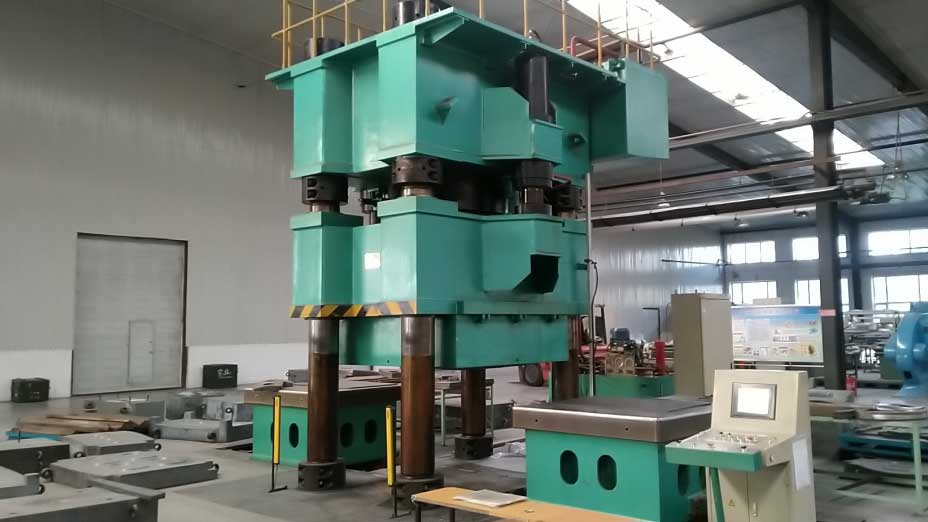
5,000 tons Rubber Pad Forming Press
What Technical Challenges Must Be Overcome?
Perfect Sheet Metal Forming
To achieve flawless precision for an aerospace-grade or automotive-grade sheet metal part, you need to understand the following three scientific factors that determine success or failure. This is also the core area where advanced servo hydraulic presses can assist you:
Precise Control of “Springback” and Low-Speed Stability
Due to the presence of elastic deformation, sheet metal attempts to revert to its original shape when pressure is released after forming (known as springback), which can cause the part dimensions to exceed tolerances.
Knowledge Point: The higher the yield strength and the thinner the material, the more severe the springback.
Solution: Modern equipment discards traditional fixed-displacement pump systems, adopting a dual-closed-loop control system consisting of a “servo driver + servo motor + high-pressure oil pump.” It features excellent stability at low speeds and low pressures, with extremely sensitive pressure and flow responses. By digitally pre-setting the forming pressure via an industrial PC (IPC) (with maximum working pressures up to 100 MPa), the constant-pressure forming incorporates automatic pressure-holding delays and smooth pressure-relief retraction, fundamentally ensuring consistent springback across every batch of parts in mass production.
Avoiding “Cross-Sectional Deviation and Wrinkling”
Super Off-Center Load Resistance and Displacement Control: When asymmetrical, irregularly shaped parts are being formed, the uneven metal flow speed in different areas can easily lead to localized wrinkling or tearing of the parts.
Knowledge Point: The press’s off-center load resistance and the stroke accuracy of the slide are critical.
Solution:
Super Pre-stressed Frame: The frame adopts a box-type structure welded from high-quality Q355 low-alloy, high-strength structural steel plates, and uses multi-layer steel strip winding technology to enhance the overall stress distribution of the frame. Together with 42CrMo quenched and tempered tie rods pre-tightened with super nuts, it ensures absolute zero structural deformation under a super forming pressure of 240 MN.
Copper-Welded Oil Cylinder for Off-Center Load Resistance: The guide sleeve and piston head of the main oil cylinder undergo a copper-welding process (tin bronze of no less than 3mm) to substantially enhance off-center load resistance and wear resistance, ensuring uniform force distribution.
Absolute Displacement Monitoring: High-quality absolute linear displacement sensors are arranged diagonally to precisely set and adjust stroke limits in real-time via a Siemens PLC and IPC (featuring extremely high repeatability).
Flawless Surface Quality
Eliminating Metal Friction and Galling: Traditional steel dies involve violent “hard-on-hard” friction, which easily damages the special protective layers on the material surface.
Knowledge Point: As a flexible medium, the polyurethane pad exerts a gentle, evenly distributed hydrostatic pressure on the metal surface.
Solution: This perfectly eliminates galling, scratching, and thinning issues. It is capable of processing aluminum alloy and titanium alloy sheets with painted, pre-coated, or anti-corrosion layers, leaving the finished surface flawless and eliminating the need for costly subsequent polishing and finishing processes.
Core Technical Parameter
Advanced rubber pad forming presses are designed and manufactured in strict compliance with rigorous general mechanical and electrical safety standards, including ISO 11161, GB 5226.1, GB/T 8196, and GB 16754.
| Key Technical Parameter | SI Standard Range / Specifications | Process Benefit & Core Advantages |
| Forming Force | 63.00 – 360.00 MN | Heavy-duty, multi-layer steel strip-wound frame structure ensuring maximum fatigue resistance. |
| Max. Forming Pressure | Up to 14,500 PSI (100 MPa) (Customized on request) | Polyurethane pad elastic forming process; forming depth ≥ 150 mm. Enables deep drawing and severe contour shaping for aerospace alloys. |
| Closed-Loop Pressure Accuracy | ±1.5 MPa (≤ ±1% Full Scale) | Ensures part-to-part consistency across high-volume batches. |
| Active Dynamic Leveling | ≤ 0.1 mm/m under eccentric load | Protects press frame and tooling from off-center force damage. |
| Programmable Dwell Time | 3 – 10 Seconds | Relieves residual stress to guarantee zero-springback precision. |
| Main Cylinder Speed | Pressing speed: 1.15–4 mm/s | Steplessly adjustable via the servo motor to match material deformation requirements. |
| Elastic Pad Specs (Polyurethane) | Hardness: 65 – 90 Shore A (Customizable) Thickness: Multi-layer stackable (100–300 mm) Material: Tensile strength > 160 kg/cm², compression deflection under load: 30%–50% | Balances fluid pressure flow with local force concentration; extends main pad service life with easily replaceable wear sheet. |
| Elastic Pad Replacement Time | ≤ 10 minutes | Core Advantage: Rapid replacement achieved via the linkage up-stroke of the top ejection cylinder, shuttle cart, and lower slide. |
| Bolster / Worktable Size | Customized on request | Dual moving bolsters (equipped at front and rear) to effectively enhance feeding and material turnover efficiency. |
| Max. Daylight / Opening | 350 – 1,200 mm | Clearance between the container bottom face and the moving bolster surface, facilitating easy tool entry and exit. |
| Operating Environment & Medium | Ambient temp: 5–40°C; Humidity: ≤ 85% Compressed air: 0.4–0.6 MPa | Uses ISO VG 46 anti-wear hydraulic oil; forced circulation cooling by an oil chiller ensures extremely low temperature rise. |
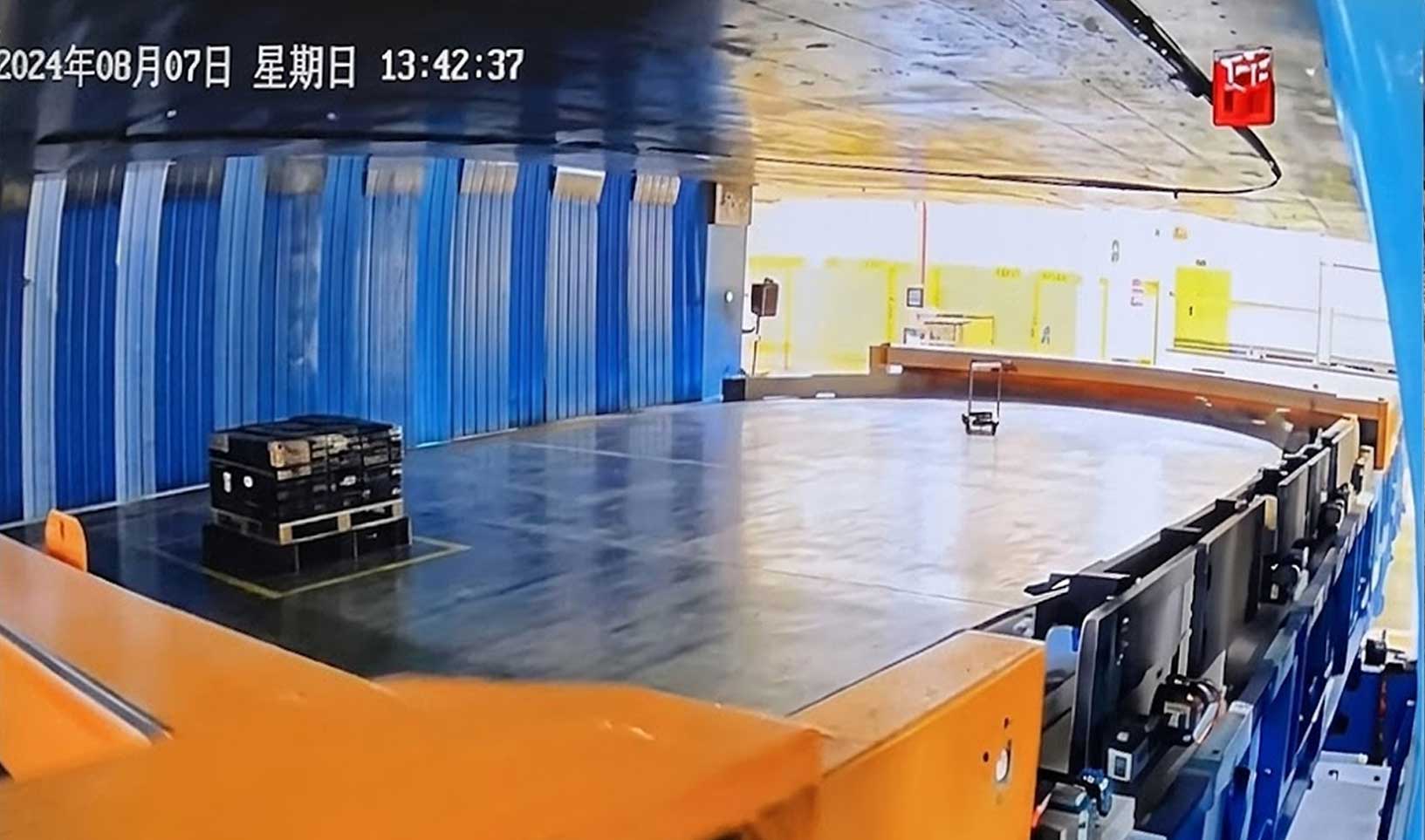
Internal Image of the BITAERON Rubber Pad Forming Machine
Unmatched Efficiency, Precision, and Sustainability for Modern Metal Forming.
Five Industrial Advantages of BITAERON
BITAERON’s Elastoforming Press delivers up to 14,500 PSI (100 MPa) forming pressure with customizable 60–90 Shore A elastomer pads, combining ±1.5 MPa closed-loop precision and a 3–10s dwell cycle to guarantee zero springback. Engineered with active 4-corner dynamic leveling (≤0.1 mm/m) and tight 0.15–0.30 mm anti-extrusion clearances, it ensures full protection against off-center loads and rubber biting while providing 63–360 MN force and ±0.05 mm repeatability for maximum efficiency.
Why Do Traditional Systems Consume 20%–60% More Energy Than BITAERON?
Compared to traditional open-loop variable pump systems, the closed-loop servo hydraulic system eliminates throttling or overflow losses during pressure-holding and cooling phases. This delivers an energy savings of 20% to 60%, while significantly reducing cooling water discharge and oil tank capacity requirements.
How Fast Can Full-Load Elastic Forming Really Be?
High-efficiency servo technology boosts output flow by over 20% to achieve record cycle speeds.
The mechanical efficiency of the servo motor and oil pump is extremely high, yielding an output flow rate that is over 20% higher under the same power rating. Under full-load, maximum-force forming conditions, the production cycle time is shortened to 200 seconds per part.
Did You Know Low Noise Means Double the Equipment Service Life?
How 80 dB servo operation eliminates kinetic shock, cuts component wear, and boosts your bottom line.
The servo control provides smoother dynamic operations, dramatically reducing kinetic shock and vibration. The maximum noise level is 80 dB (approximately 15 dB lower than traditional variable pump models), which significantly reduces wear on mechanical components and doubles the overall service life of the equipment.
Why Let Your Press Sit Idle While Operators Load Materials?
Discover how dual shuttle tables enable 100% continuous, non-stop forming.
Double Your Output with Zero Downtime Loading Why let your multi-million dollar press sit idle during material loading? With our front-and-rear dual shuttle system, loading and forming happen at the exact same time. The intelligent motion control ensures ultra-smooth transport—starting gently, moving rapidly, and stopping precisely—so materials never shift, and operators stay completely safe.
Who Says Operating a Rubber Pad Forming Press Requires Months of Training?
Operating Heavy Machinery Made as Simple as Using a Tablet Powered by top-tier Siemens controls, operators can visualize and adjust pressure and speed with a few taps on a screen. The machine automatically tracks all processing history for complete quality control, while multi-level access permissions prevent unauthorized settings and costly operator errors.
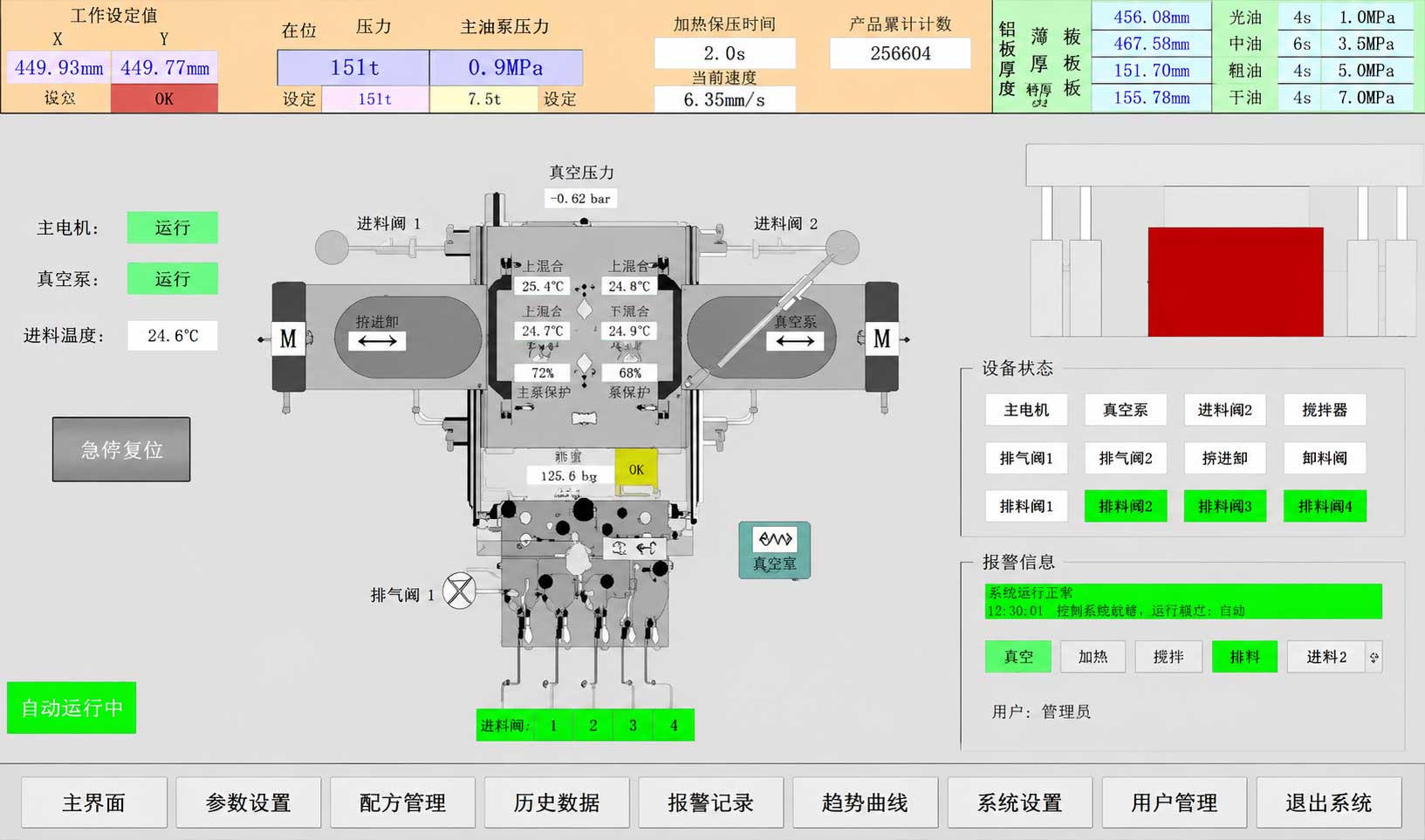
CNC Control for Rubber Pad Forming Press
Why Choose Rubber Pad Forming?
Rubber pad forming technology utilizes a flexible polyurethane medium to apply uniform pressure across the workpiece, delivering exceptional dimensional stability, minimal surface marking, and significantly reduced tooling costs.
Did You Know Traditional Sheet Forming Is Costing You More Than You Think?
The 4 Hidden Hurdles of Rigid Die Processing that erode your margins, delay lead times, and increase scrap rates:
High Scrap Rates from Surface Scratches – Hard metal-to-metal contact causes scratches and galling, forcing expensive manual polishing or high rejection rates.
Astronomical Tooling Investment – Paired rigid male/female dies demand massive upfront capital and long development cycles, locking up your budget for short-run projects.
Unpredictable Secondary Rework Costs – Severe material springback leads to inconsistent part dimensions, driving up assembly line downtime and fit-up labor.
Rigid Die Flexibility Bottleneck – Design modifications require re-machining expensive steel dies, making rapid prototyping and custom batches financially unviable.
5 Key Ways Rubber Pad Forming Presses Cuts Manufacturing Costs by Up to 80%
From single-die tooling to zero post-polishing, see how we redefine sheet metal efficiency.
Engineered to meet strict quality standards while significantly lowering your total cost of ownership.
PBF Series Rubber Pad Forming Presses are engineered to meet diverse component requirements and strict surface quality standards. The process capability can be categorized as follows:
High Precision Forming – Uniform Pressure Distribution, Reduced Springback, High Dimensional Stability
Superior Surface Quality – Scratch-Free Finish, Zero Surface Tearing, Eliminates Post-Polishing Steps
Versatile Material Compatibility – Supports Aluminum, Coated Steel, and Titanium Alloys without Damaging Protective Films
Ultra-Low Tooling Costs – Requires Only Single Rigid Dies, Reducing Tooling Expenses to 20%–30% of Traditional Hard Dies
Flexible Small-to-Medium Batch Production – Quick Tooling Changeovers, High Versatility, Ideal for Prototyping and Short-Run Manufacturing
BITAERON elastoforming combines flexible tooling with closed-loop pressure control and active leveling to eliminate springback safely.
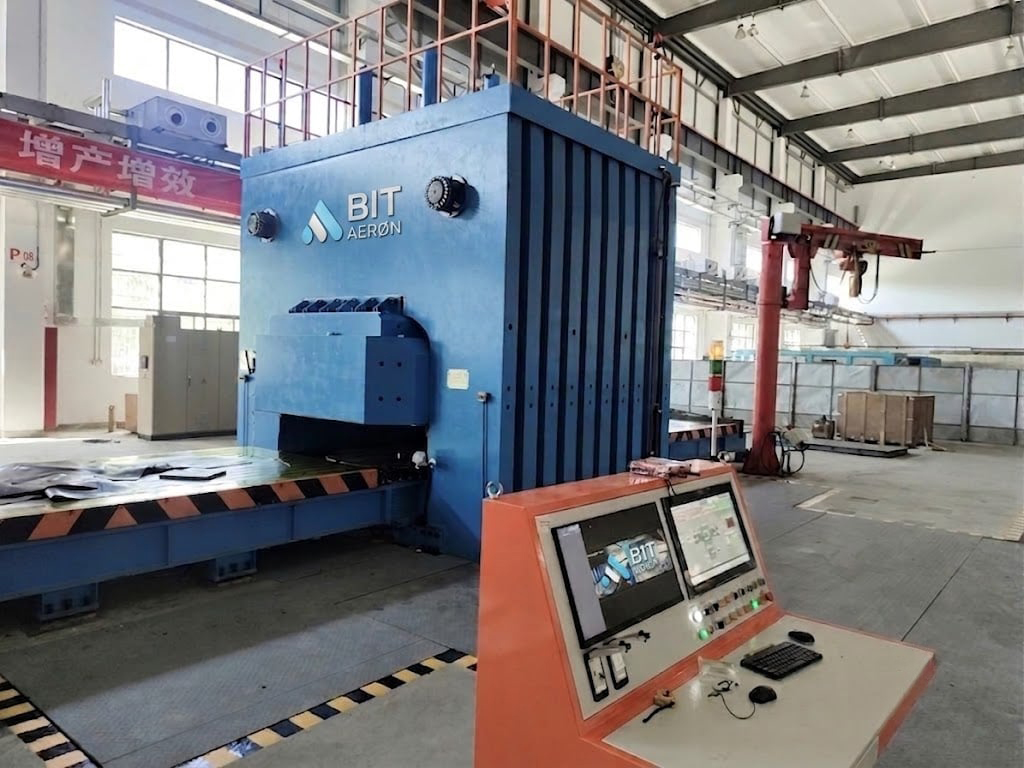
12,000 tons Rubber Pad Forming Press
Uses Of Rubber Pad Forming Press?
Almost any type of sheet metal can be formed using the rubber pad forming process. Materials suitable for ambient-temperature forming include aluminum and its alloys, α-brass, stainless steel, and low-carbon steel.
BIT AERON engineers specially designed polyurethane pads tailored to product characteristics, precisely configuring properties such as elasticity and compressive strength to satisfy diverse product manufacturing requirements.
Did You Know These 4 Key Application Scenarios?
Aerospace Industry: Ideal for lightweight structural parts, such as aluminum skin panels used in fuselages and satellite components, where up to 60% of sheet metal parts can be processed using this technology. It is also applied to thin-walled stainless steel double-convex cross-section tubes used in strain-energy deployable truss structures for space applications, including satellite hinges and deployable components.
Automotive Industry: Rapid prototyping for body panels to significantly shorten design and development cycles. Perfectly suited for low-volume production and customized automotive parts.
Medical Device Industry: High-precision sheet metal enclosures and housings engineered to meet strict hygiene, durability, and aesthetic standards.
Architectural Metalworking: Stainless steel or aluminum column covers, embossed facades, and decorative metal cladding components.
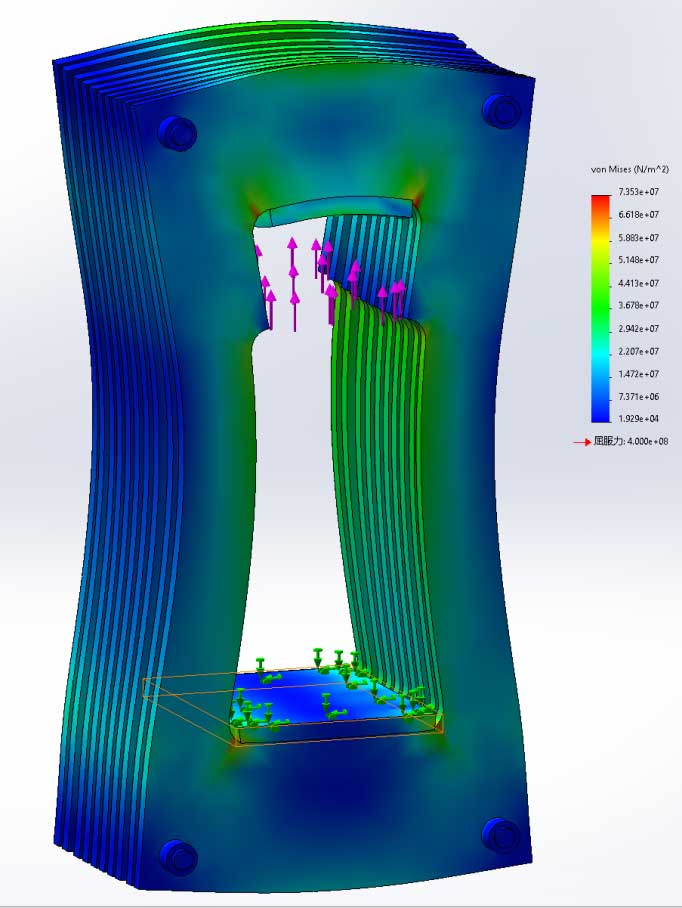
Frame Stress FEA
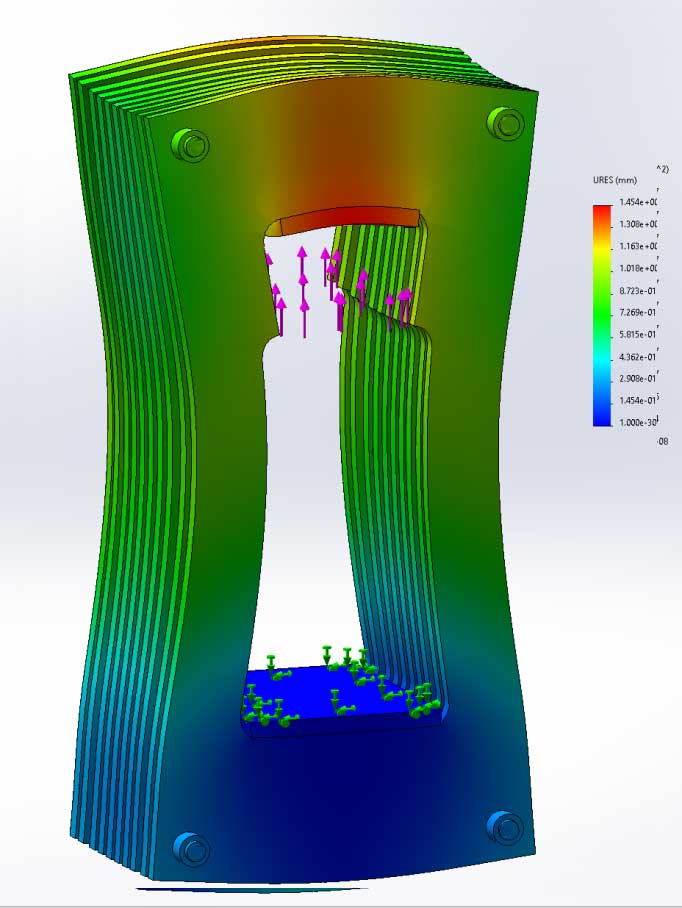
Frame Deformation FEA
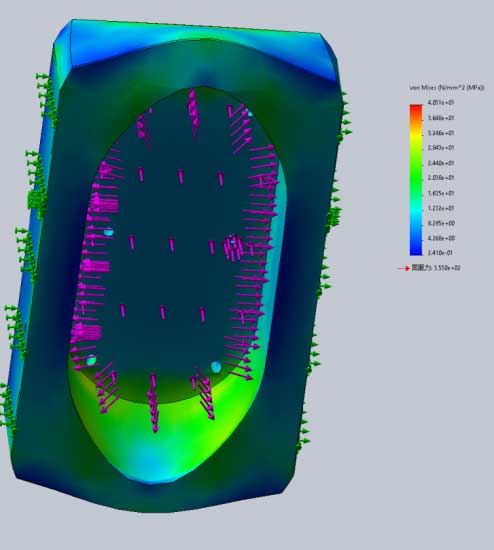
Rubber Pad Container Stress FEA
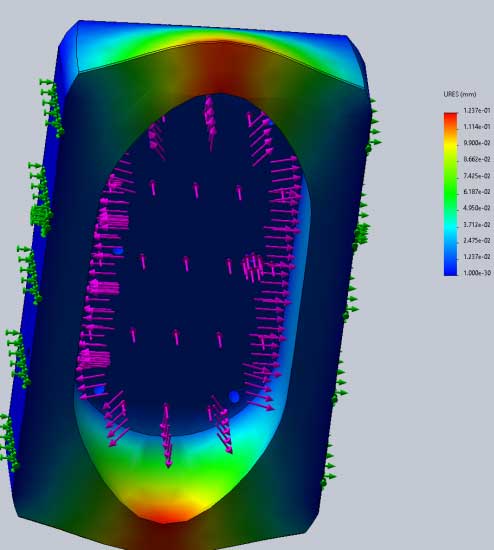
Rubber Pad Container Deformation FEA
How It’s Built
The rubber pad forming press utilizes a bottom-drive hydraulic architecture. Its primary assemblies include the frame, slide, main cylinder system, dual moving bolsters, elastomer container, polyurethane pad, fast pad-change device, quick die-change system, hydraulic system, cooling system, electrical control, stroke limiters, and integrated safety systems.
How We Guarantee Zero Frame Distortion Under High Tonnage
The press body employs a multi-layer steel plate frame structure to ensure extreme structural rigidity.
Frame integrity is secured via high-strength tie rods pre-tightened with super nuts, or optional multi-layer steel strip winding technology.
The slide, situated in the center, features a heavy-duty box-type structure welded from thick steel plates.
Can Your Press Handle Asymmetrical Parts Without Destroying Tooling?
In elastomeric forming, asymmetrical parts cause severe off-center loading that quickly destroys standard presses.
To solve this, our press features a bottom-drive main cylinder system linked to the slide via flexible spherical pads.
Instead of fighting the eccentric forces, this smart self-aligning design completely isolates off-center loads from the cylinder guide sleeves—eliminating uneven wear, preventing hydraulic leaks, and dramatically extending the cylinder’s operating lifespan.
Why Does Real-Time Leveling Stop Slide Tilt in Milliseconds?
To keep the heavy slide perfectly horizontal under massive pressure, four corner auxiliary cylinders work under an active hydraulic leveling system.
Unlike traditional mechanical stops, diagonal absolute linear displacement sensors track slide parallelism down to the micron in real time. If any tilt exceeds safe limits, the control system instantly halts operation in milliseconds, providing total protection for your custom tooling.
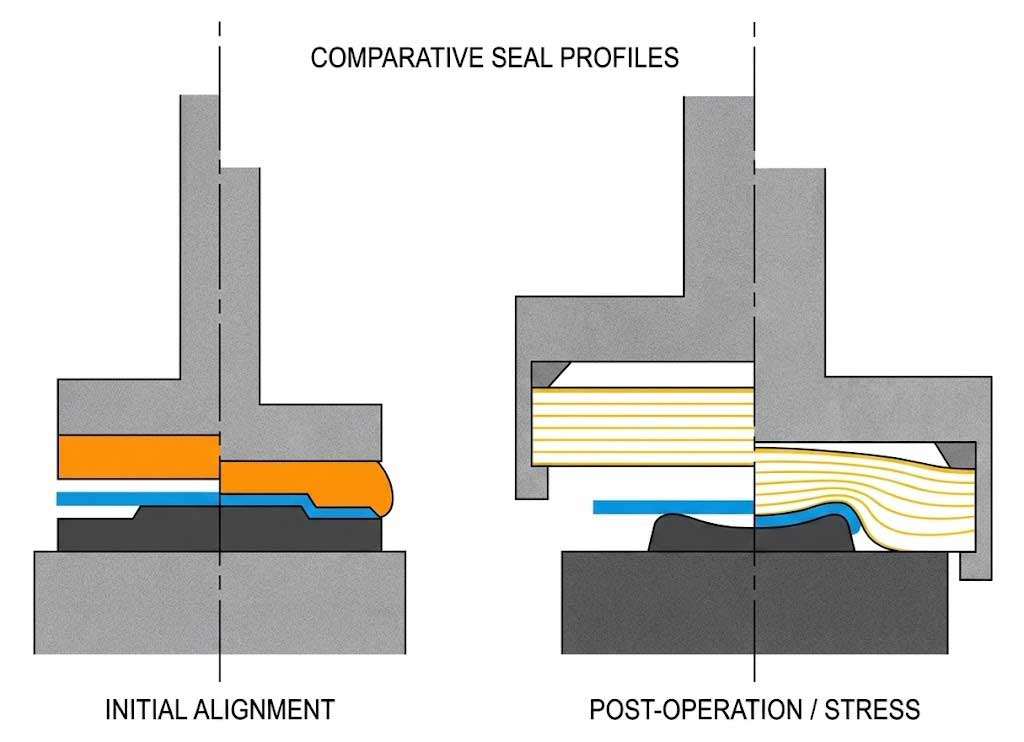
Working Principle Diagram
How the Press Works
Under high pressure, rubber or polyurethane exhibits fluid-like properties, enabling the elastomer pad to distribute pressure uniformly across the sheet metal blank. As pressure increases, the pad progressively conforms to the precise geometry of the single-sided rigid die.
When the hydraulic ram descends, the heavy-duty polyurethane/rubber pad is forced into a sealed tray containing the sheet metal blank and single lower form block. As hydraulic pressure ramps up to peak operating levels (customizable up to 14,500 PSI, as dictated by part geometry), the dense elastomer acts as a quasi-fluid media, exerting equal pressure across all surfaces to press the metal perfectly against the form block contours. Upon reaching peak tonnage, a 3–10 second programmable dwell cycle holds pressure to relieve internal residual stresses, ensuring zero springback and absolute part repeatability
See the Step-by-Step Forming Action?
The sheet metal blank is placed between a rigid die (typically a male punch) and the flexible rubber pad. Under pressure applied by the rigid tooling, the rubber pad undergoes elastic deformation and flows like a fluid, conforming to the contours of the die. It tightly encapsulates and presses the sheet metal against the punch, forming it into the exact shape of the die.
Once forming is complete and pressure is released, the rubber pad fully recovers to its original shape thanks to its excellent elasticity, ready for the next cycle.
Why Parts Are Scratch-Free & Stronger: The Secret to Flawless Edge Forming?
Compared to traditional metal stamping, sheet metal components produced via rubber pad forming feature a flawless, scratch-free surface with significantly more uniform stress distribution—substantially boosting their overall fatigue strength.
To achieve this, modern advanced presses optimize pressure control curves and utilize high-strength polymer polyurethane pads to minimize early-stage lateral material slippage, effectively reducing non-formable edge and corner zones to an absolute minimum.
Frequently asked questions
How Pad Hardness & Thickness Define Forming Precision
Shore A Hardness Selection (65A – 90A):
Soft Pads (65A–75A): Provide superior fluid-like flow, ideal for deep drawing, contoured flanges, and delicate aluminum alloys without surface scratching.
Hard Pads (80A–90A): Deliver high localized pressure transfer, crucial for crisp bend radii, sharp beads, and high-strength titanium or stainless steel forming.
Optimized Pad Thickness & Layering:
A multi-layer elastomer stack allows cost-effective wear-layer replacement. The top protective layer directly contacts the sheet metal, absorbing local shear stress, while the core thick pad maintains uniform 14,500 PSI hydrostatic pressure distribution.
Can the rubber pad be replaced easily when worn?
Yes. BITAERON utilizes a modular multi-layer design. Only the sacrificial bottom wear-pad (contacting the metal blank) needs periodic replacement, drastically lowering consumable costs compared to replacing the entire monolithic pad block.
How Does Rubber Pad Forming Compare to Sheet Hydroforming?
While both processes utilize a flexible medium—rather than two rigid metal dies—to shape sheet metal, they differ significantly in pressure dynamics, part definition, tooling investment, and cycle times.
Sheet Hydroforming delivers superior, uniform fluid pressure (up to 1,000+ bar) directly against the blank via a diaphragm or fluid chamber. This results in more uniform pressure distribution, sharper detail definition, deeper draw capabilities, and true net-shape parts with minimal secondary finishing.
Rubber Pad Forming (Elastoforming) uses a solid/laminated elastomeric block (polyurethane or rubber) as a universal female die. It offers substantially lower upfront tooling and equipment costs, faster setup, and easier maintenance, making it exceptionally cost-effective for prototype development, short-to-medium production runs, and shallow-to-medium depth parts.
Process Comparison Matrix
| Control Parameter | Impact on Rubber Pad Forming Quality | Typical Failure Modes & Defects |
|---|---|---|
| 1. Elastomer Durometer (Pad Hardness) | Dictates hydraulic pressure transmission and local conformance to the form block. | Too Soft: Insufficient lateral force; causes flange wrinkling. Too Hard: Restricts elastomer flow into deep cavities. |
| 2. Form Block Height | Defines physical stretching and compression limits of the rubber pad. | Too Tall: Excessive elastomer strain leading to premature rubber pad tearing and incomplete corner forming. |
| 3. Corner & Fillet Radii | Controls rheological flow resistance of the rubber pad during stroke. | Too Sharp: Rubber fails to flow into tight angles, causing voids, wall thinning, or metal tearing. |
| 4. Workpiece Thickness & Material | Directly determines required tonnage and unit pressure (MPa/PSI). | Over-thickness: Triggers severe springback, resulting in open flange angles and out-of-tolerance dimensions. |
Which Process Should You Choose?
Choose Rubber Pad Forming if: You prioritize low initial investment, quick time-to-market, and high flexibility for prototypes, small-to-medium production batches, or structural aerospace/industrial panels where ultra-deep drawing isn’t required.
Choose Sheet Hydroforming if: Your parts demand extremely deep draws, tight dimensional tolerances, net-shape geometries, or intricate surface details where eliminating all secondary benching/finishing operations outweighs higher tooling costs.
What Materials Are Commonly Formed Using Rubber Pad Forming?
Depending on the part geometry, bend radius, and sheet thickness, Rubber Pad Forming (Elastoforming) is primarily used with ductile sheet metals. The ideal materials include aluminum alloys, low-carbon steel, stainless steel, and other formable alloys.
.
| Material Category | Common Grades & Alloys | Formability & Application Characteristics |
|---|---|---|
| Aluminum Alloys | 2024, 6061, 7075 (typically O-temper condition) | Excellent: The most widely used material in rubber pad forming. Offers high ductility, minimal tool wear, and precise contouring for aerospace/defense skins and structural ribs. |
| Low-Carbon Steel | Mild steel grades (e.g., CR4, A36 thin sheet) | Good: Ideal for general industrial housings, brackets, and automotive prototypes requiring good stretchability and moderate yield strength. |
| Stainless Steel | 304, 316, 301 (annealed) | Moderate: High strength requires higher unit pressure (MPa/PSI). Excellent surface protection with zero metal-to-metal galling or scratches. |
| Other High-Ductility Metals | Copper, Brass, Titanium (commercially pure / annealed) | Specialized: Highly ductile metals form easily; titanium may require specialized pad durometers or hot rubber forming for complex profiles. |
When Should You Use Rubber Pad Forming (Elastic Forming) for Sheet Metal Components?
Elastic forming (Elastoforming) is the ideal manufacturing process when high-precision sheet metal components require complex geometry in a single stroke, zero surface defects, and low tooling costs.
Below are the primary industry applications, material compatibilities, and operational scenarios where elastic forming excels:
1. Optimal Production Volume & Industry Applications
Best Fit: Ideal for small-to-medium batch production as well as rapid prototyping and R&D development.
Key Industries:
Aerospace & Defense: Structural airframe components, ribs, brackets, and skin panels.
Automotive: Specialized body panels, prototype parts, and low-volume structural frames.
Home Appliances & Industrial Equipment: High-end enclosures and complex contoured housings.
2. Compatible Materials & Single-Stroke Efficiency
Elastic forming efficiently processes high-performance alloys including Aluminum Alloys, Stainless Steel, and Titanium Alloys.
Consolidation of Operations: It enables the creation of highly complex parts—which traditionally required multiple steps such as cutting, bending, and joint forming—into a single, unified sheet metal component in just one press stroke.
3. Why Aerospace Heavily Relies on Elastic Forming
Aerospace technical regulations and strict safety standards often restrict the use of conventional rigid metal dies. Elastic forming with polyurethane/elastomer pads provides critical structural advantages:
Zero Surface Scratches: Soft flexible pads prevent tool marks, die galling, and surface degradation.
Minimized Wall Thinning: Fluid-like pressure distribution reduces localized strain and prevents excessive material thinning.
Elimination of Stress Concentrations: Maintains the structural integrity and critical safety fatigue-life required for aircraft airframes.
What are the Key Control Parameters and Defect Prevention Rules in Rubber Pad Forming DFM?
In Rubber Pad Forming (Elastoforming), preventing part defects and optimizing tool longevity depends on balancing the elastomer’s fluid-like behavior with the geometry of the metal blank and form block. Below is the Design for Manufacturability (DFM) control guide:
Control Parameter
| Control Parameter | Impact on Rubber Pad Forming Quality | Typical Failure Modes & Defects |
|---|---|---|
| 1. Elastomer Durometer (Pad Hardness) | Dictates hydraulaic pressure transmission and local conformance to the form block. | Too Soft: Insufficient lateral force; causes flange wrinkling and unformed corners. Too Hard: Restricts elastomer flow into deep cavities and complex contours. |
| 2. Form Block Height | Defines the physical stretching and compression limits of the rubber pad. | Too Tall: Excessive elastomer strain leading to premature rubber pad tearing, severe pressure drops, and incomplete bottom-corner forming. |
| 3. Corner & Fillet Radii | Controls the rheological flow resistance of the rubber pad during stroke. | Too Sharp (Small Radii): Rubber fails to flow into tight angles, causing voids, localized wall thinning, or metal blank tearing. |
| 4. Workpiece Thickness & Material | Directly determines the required tonnage and unit pressure (MPa/PSI). | Over-thickness / High Yield: Triggers severe springback, resulting in open flange angles and out-of-tolerance dimensions. |